Memorial story
Mohammad Jameh-Bozorg
Mohammad Jameh-Bozorg (Persian: محمد جامهبزرگ) was born on 3 Farvardin 1342 (23 March 1963) in Tuyserkan, Hamadan Province. His father's name was Ezzat. He lived in Malard, west of Tehran, with his wife Maryam Jafari and their two sons, Masoud and Meysam, and owned a carpet shop across the street from the family home. He was 59 when he was killed.
Archive
Record & remembrance
Dates, places, sources, and messages — the same details as the full profile, kept on this page.
Mohammad Jameh-Bozorg (Persian: محمد جامهبزرگ) was born on 3 Farvardin 1342 (23 March 1963) in Tuyserkan, Hamadan Province. His father's name was Ezzat. He lived in Malard, west of Tehran, with his wife Maryam Jafari and their two sons, Masoud and Meysam, and owned a carpet shop across the street from the family home. He was 59 when he was killed.
On Wednesday 31 Shahrivar 1401 (22 September 2022), during the Woman, Life, Freedom protests, his street became a scene of protest. According to the account his elder son Masoud gave to Shargh, which the Abdorrahman Boroumand Center summarises, a plainclothes agent grabbed Masoud as he crossed the street from the shop and tried to arrest him, and six agents then tried to seize both brothers at the front door. Mohammad came out with a shovel, the agents withdrew from the yard, and the brothers locked the gate; the agents threw tear gas into the yard and broke windows before leaving. A relative quoted by BBC Persian described the clash as his refusal to let agents take protesters who had run into the house. Either way, the agents spray-painted a mark on the wall by the door. The next morning a stranger warned him that the local Basij base was talking about arresting him or one of his sons. He replied that they had done nothing that required them to run.
At about 3:30 a.m. on 2 Mehr 1401 (24 September 2022), a man in a medical mask rang the bell. His sons escaped across the roof to a neighbour's house and he hid on the roof. Agents climbed over the wall, found him and tried to arrest him without a warrant. His sons heard him shout that his shop was across the street, that he had been there until ten that night, and that if the agents had a warrant they should come back in the morning; he told them, "Even if there are a thousand of you, you cannot take me without a warrant." The team leader threatened to call a second team that would kill him. Six more men arrived, two of them took his wife upstairs and shut the door, and she heard a shot. An agent told her nothing had happened and that he was only feeling a little unwell, and took away the glass of water she had brought. When she reached the roof she found him lying alone, the back of his head covered in blood: he had been shot in the eye. The forensic examination and a weapons expert found that birdshot had been fired from the front at a distance of about one metre, a shot the expert described as intended to kill. He was buried in Malard; the prosecutor's final indictment noted attempts to prevent the burial there and false reports filed by agents to divert the case.
The investigating judge of the first branch of the West Tehran military prosecutor's office ordered the arrest of the agents involved, and 12 of the 14 accused were detained, while two remained at large. The shooter turned out to have earlier criminal cases, including one for carrying an unlicensed Winchester shotgun. On 20 Dey 1402 (10 January 2024), Branch 5 of Tehran Military Court 1 sentenced him to qisas (retribution in kind) for intentional murder and gave prison terms to two other agents, including the commander of the second team; family lawyer Payam Derafshan said the court confirmed that the agents entered the home without a judicial warrant and that the unit had armed an untrained recruit with a criminal record. According to the Boroumand Center, Branch 29 of the Supreme Court upheld the verdict in 2024, describing the shooter as a Basij member. In Tir 1404 (July 2025) the head of the judiciary declared that ruling clearly contrary to sharia and sent the case back to Branch 1 of the Supreme Court, which in Mehr 1404 acquitted the shooter of intentional murder and sentenced him to three years in prison and blood money for quasi-intentional killing, also ordering the Basij to pay blood money; the ruling referred to a request from the commander-in-chief of the Revolutionary Guards.
At his grave on the first anniversary, 3 Mehr 1402 (25 September 2023), Masoud said his father believed the law came first and reminded the raiders of it twice, and was answered with bullets aimed at his eye, face and skull. "In seeking justice for our father's blood we are not looking for justice," he said. "If there were justice, my father would be alive today." Amnesty International's 2026 report lists MOHAMMAD JAMEH BOZORG, age 59, killed in Malard on 24 September 2022; Iranian rights lists record him as killed in Marlik, Karaj.
In their words
What Mohammad Jameh-Bozorg said, and what others remember about them.
If there were a thousand of you, you cannot take me without a warrant.
Messages of remembrance
Words left for Mohammad Jameh-Bozorg. Unlike social media, these stay here — a lasting place for their story.
Leave a message
Are you family?
Social posts fade. We preserve Mohammad Jameh-Bozorg's story permanently. Families can claim this page, help keep it accurate, and receive messages left by visitors.
Loading...
Related Event
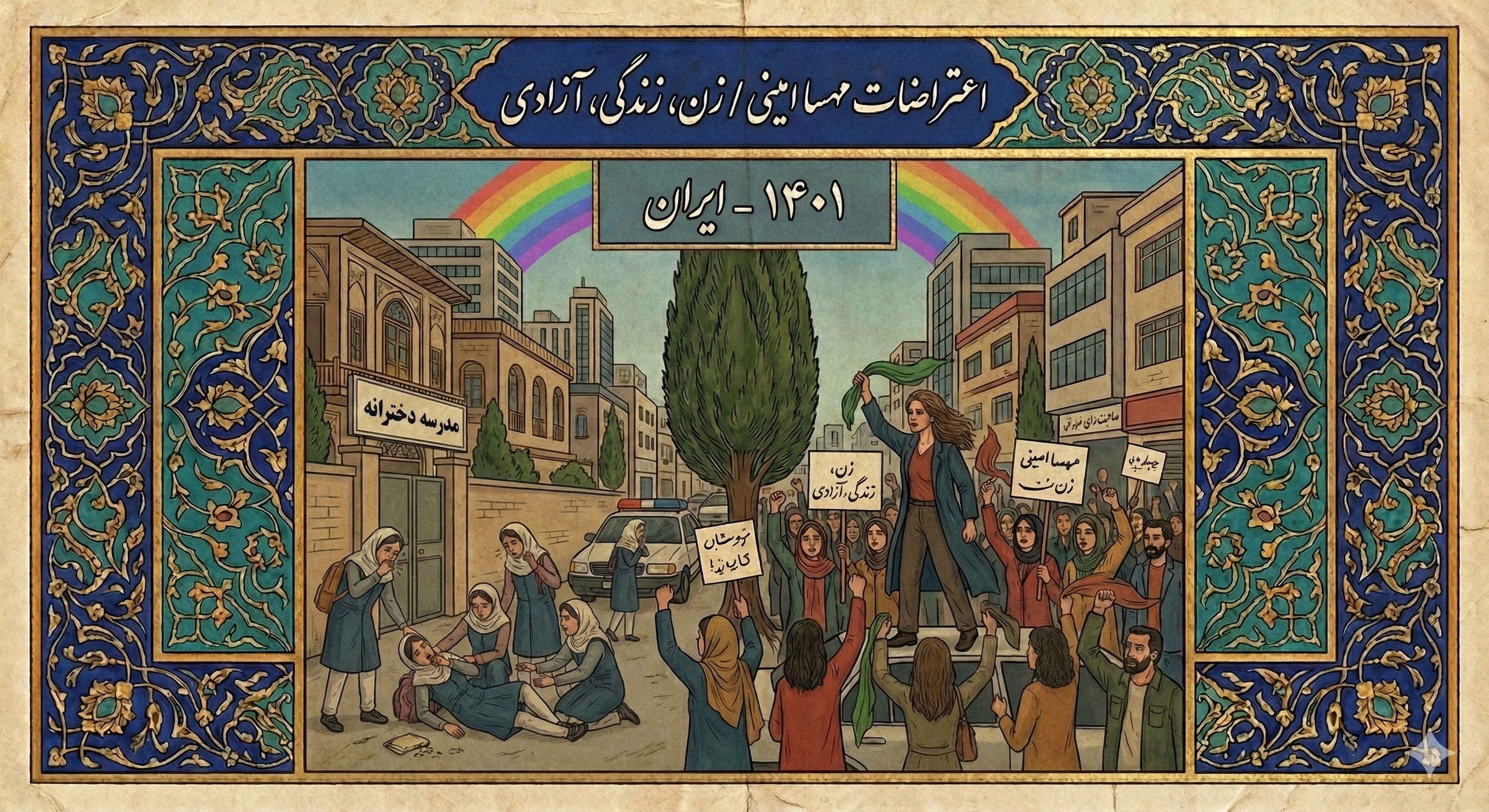
Mahsa Amini Protests / Woman Life Freedom
Sep 16, 2022 – May 1, 2023
Woman, Life, Freedom: The Uprising That Changed Iran ForeverDate: September 16, 2022 – Ongoing Category: Human Rights & Social Movements...