Memorial story
Alireza Sepahi
Alireza Sepahi (full name Alireza Sepahi Badjani) was a 25-year-old protester from Isfahan, born in 1380 in the Iranian calendar (2001). Some reports give his age as 24. He was hanged at dawn on Monday, 5 October 2026 (13 Mehr 1405) in Isfahan Central Prison, known as Dastgerd Prison, as one of the defendants in the so-called "Alikhani Square" case, which grew out of the nationwide uprising of January 2026 (Dey 1404). He was executed on the same morning as his co-defendant Alireza Raeisi.
Archive
Record & remembrance
Dates, places, sources, and messages — the same details as the full profile, kept on this page.
Alireza Sepahi (full name Alireza Sepahi Badjani) was a 25-year-old protester from Isfahan, born in 1380 in the Iranian calendar (2001). Some reports give his age as 24. He was hanged at dawn on Monday, 5 October 2026 (13 Mehr 1405) in Isfahan Central Prison, known as Dastgerd Prison, as one of the defendants in the so-called "Alikhani Square" case, which grew out of the nationwide uprising of January 2026 (Dey 1404). He was executed on the same morning as his co-defendant Alireza Raeisi.
The case concerns the protests of 8 January 2026 (18 Dey 1404) around Alikhani Square, between Malekshahr and Kaveh in northern Isfahan. The authorities say four members of the police and Basij were killed there. Hengaw reports that on 8 and 9 January security forces opened fire directly on protesters in the same area and killed a number of people. According to Iran Human Rights, 62 people were arrested in connection with the case and at least a dozen were sentenced to death. Forced confessions from the defendants, with blurred faces and changed names, were broadcast on state television on 23 January 2026, months before any final verdict.
Alireza was arrested at home on 10 January 2026 (20 Dey 1404) together with his mother, Somayeh Afshar. Iran International's "Truth Discovery" campaign reported that he was hit by four pellet rounds during the raid and was tortured in detention. The UN Special Rapporteur on Iran, Mai Sato, wrote that his mother was reportedly tortured in front of him, and that he and his cousin Abolfazl Sepahi were beaten and tortured in front of their families. His mother was later sentenced to five years in prison.
Judge Morteza Barati of Branch 2 of the Isfahan Revolutionary Court sentenced him to death four times. According to the judiciary's Mizan news agency, the charges included membership in a "baghi" (armed rebel) group, "moharebeh" (enmity against God), "efsad-fil-arz" (corruption on earth), incitement to war and killing, and acting against national security. Mizan called him the "main defendant" and claimed that he and Alireza Raeisi had set a security officer on fire with gasoline; these are the regime's allegations. HRANA reported that his lawyers had no effective access to the file, could not obtain a copy of the verdict, and that hearings were held by video link while defence evidence was ignored. A source close to his family said CCTV footage and other evidence showed he was not at Alikhani Square at the time of the incident, and several co-defendants said they had been pressured and tortured to place him at the scene.
On 28 July 2026 (6 Mordad 1405) he was due to be hanged in public in Alikhani Square together with his cousin Abolfazl Sepahi Badjani and Amirhossein Safari Hosseinabadi. Minutes before he was taken to the gallows he suffered a heart attack and was rushed to Al-Zahra Hospital; the other two were hanged in public that morning. He was returned to prison two days later. On 2 September 2026, Branch 39 of the Supreme Court accepted his request for a retrial and referred the case to a parallel court, but Branch 2 of the Isfahan Revolutionary Court rejected it without holding a hearing and sent the case back for execution. On 12 September he was moved to solitary confinement.
Alireza had been engaged to Mahshad Keshani (also reported as Kashani), a student who was herself arrested during the January protests and is serving a five-year sentence in Dowlatabad Prison in Isfahan. On Sunday, 4 October 2026, the day before his execution, the two were married by telephone from their separate prisons; the couple were never allowed to meet in person. The same day his family was summoned for a final visit, and his mother was brought from Dowlatabad Prison to see him. His lawyer, Shahrzad Shahbazi, wrote that day: "My client Alireza Sepahi is breathing today; maybe not tomorrow." Nobel laureate Shirin Ebadi said: "Yesterday he became a groom, and today they executed him."
According to sources close to the family, the authorities did not allow him to be buried in his home town, and he was buried in Kashan. He was the seventh defendant executed in the Alikhani Square case, after Erfan Esfandiari, Gol Mohammad Mohammadi, his cousin Abolfazl Sepahi, Amirhossein Safari and Ghaem Hosseini. Iran Human Rights described these executions as "a continuation of the mass killing of January protesters, first on the streets, now through executions."
Messages of remembrance
Words left for Alireza Sepahi. Unlike social media, these stay here — a lasting place for their story.
Leave a message
Are you family?
Social posts fade. We preserve Alireza Sepahi's story permanently. Families can claim this page, help keep it accurate, and receive messages left by visitors.
Help complete this memorial
Parts of this page are still incomplete. If you know more about this person, you can help us remember them more fully.
- Date of birth
- Words they said, or others said about them
Loading...
Related Event
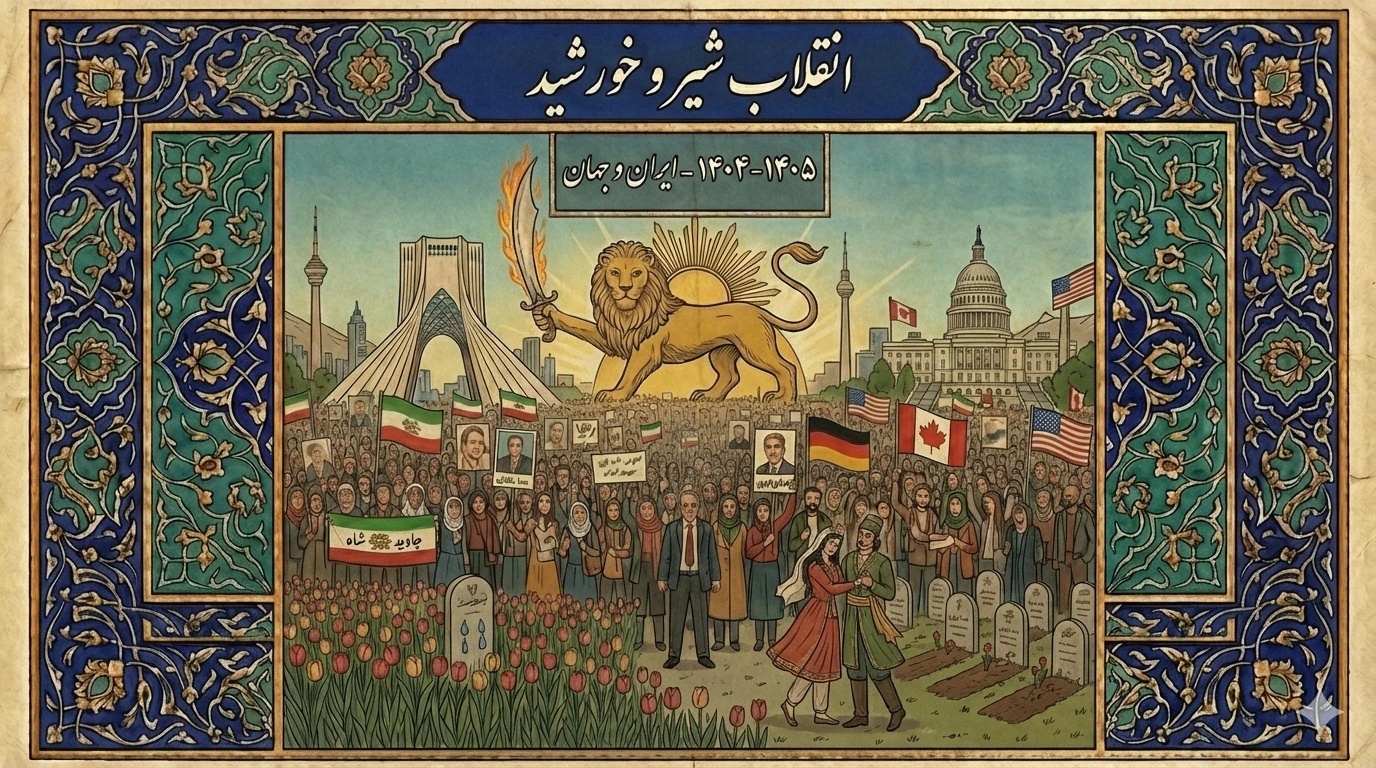
The Great Massacre
Jan 1, 2026 – Jan 26, 2026
The protests of January 2026, known among Iranians as the "Bloody Dey of 1404," represented the most widespread and lethal challenge to the Islamic Republic since its inception. Triggered by a catastrophic economic collapse—following the...